News 08/03/2026
Celebrating International Women’s Day: Ruth’s Story of Recovery
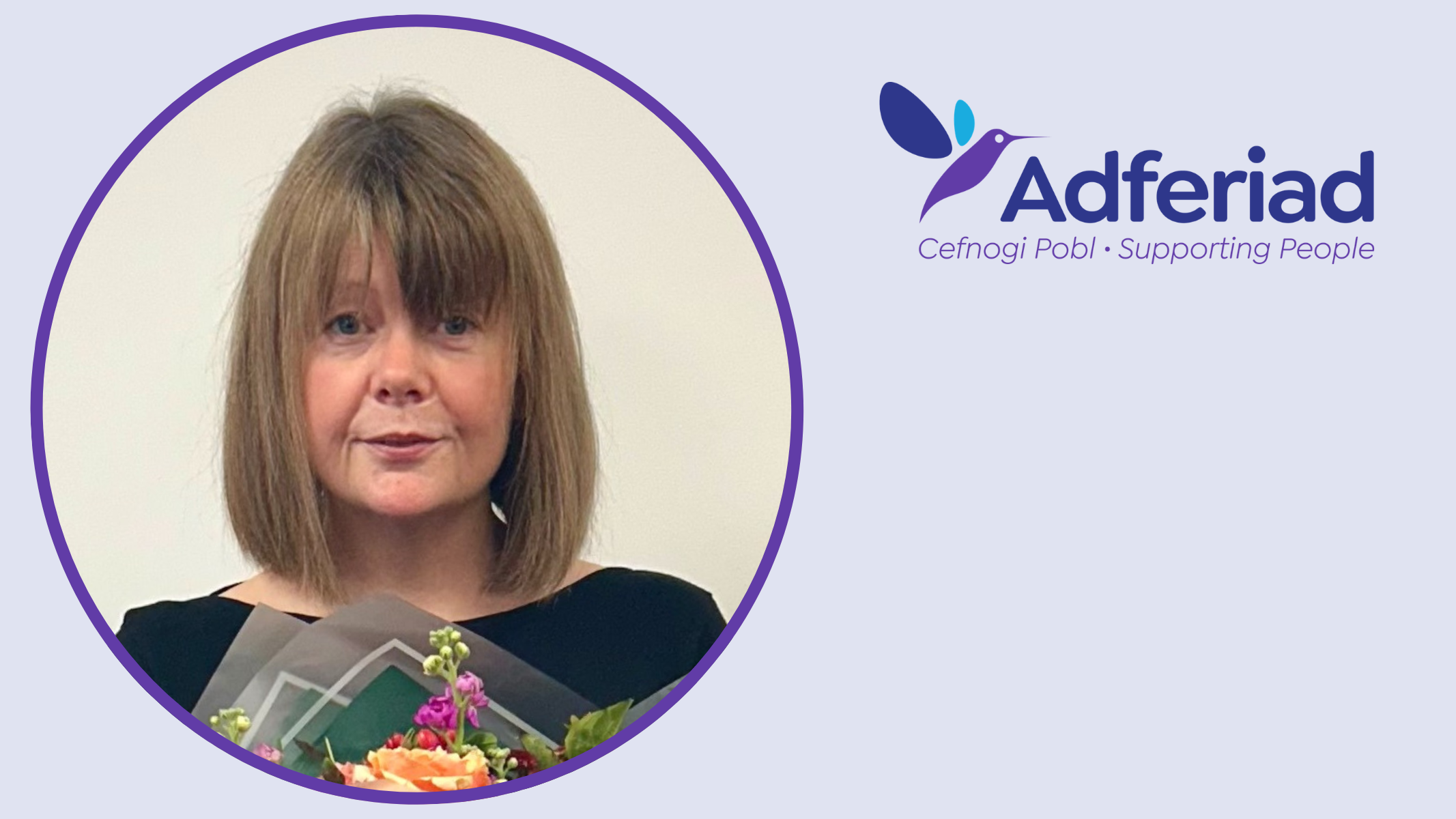
This International Women’s Day, we reflect on all the inspiring women who help make Adferiad who we are. They are the people we support every day, our colleagues, trustees, volunteers, and the many partners and communities who shape and strengthen our work. Adferiad is shaped by powerful women with powerful stories to tell; and none more so than Ruth Wilson.
From being sectioned under the Mental Health Act in the mid-1990s to 24 years working at Adferiad now under her belt, Ruth’s story shows how the right support at the right time, paired with determination, can be truly life-changing. We spoke to Ruth about how she changed her life, and helped so many others to do the same along the way.
“I was living in Liverpool during the mid-1990s when my mental health completely unravelled. Vulnerabilities, including unsafe housing, PTSD, bereavement, and substance use, led me to becoming suicidal and to eventually experiencing a psychotic breakdown.
I was sectioned and spent the following year in hospital. I was left feeling that all the things which made me who I was were being stripped away. I had no autonomy, everything was done for me and nobody asked me any basic questions of “how are you?” and “how does this feel?”.
In 1995, I was encouraged to move to Wales. Initially, there was little change, and I spent another year in hospital. I felt like I had no sense of myself and that I had nothing to offer. I also felt institutionally dehumanised. This was made worse by the stigma towards mental illness in the 1990s, which left me feeling just a destructive sort of shame. This was alongside a sense of absolute hopelessness.
Things then changed.
In 1996, I was referred by my care team to a new 24-hour housing project in Aberystwyth – the Ystwyth run by Adferiad (formerly the NSF/Hafal). I was offered a lovely flat in town. Having my own home was suddenly having something wonderful. I also had this very humane and empathic support. The staff believed in me and in the possibility of my future.
Support meant I could make my life, my own again. Adferiad’s recovery-focused ethos allowed me to relearn life skills and to gain confidence. I hadn’t ever come across people before who believed that people could get better, it was like you had the diagnosis and that was it, there was no journey you could go on. Adferiad just did things very differently – you can get better, you can go into work, you can do whatever you feel will fulfil you. It meant I could return to old interests and find new passions. It meant I could learn and develop again.
Adferiad have always encouraged clients to contribute to the running of the service, and so, I became an active volunteer. This then led me to becoming an Adferiad employee in 2002. This presented me with a wonderful opportunity to use my experiences for some good. I have now worked for the organisation for 24 years as both a Manager and a Support worker. During this time, I have had the enormous privilege to help clients as I was helped, and to see them find their way to recovery.
Getting the opportunity to work with the organisation has been brilliant, using what people did to help you to go on and help others, with the knowledge that they will hopefully at some point do the same too. It’s always been a huge privilege to be part of an organisation that wants to make things better. We live in a society where things seem to be getting worse and worse, so to have a few lights left on is going to become more and more important, and I think Adferiad is one of those lights.
It’s hard to encapsulate the last 24 years in a nutshell, but a lot has changed in mental health, and Adferiad, Hafal and NSF Cymru have been instrumental in leading that change. The stigma people with a mental health diagnosis faced was incomparable and the opportunities they had were non-existent.
If you’ve got any kind of social conscience, you want to be part of something that can help drive change, and I think Adferiad have been very much at the forefront of leading that change in support, not just mental health but also drug addiction and across the board in health and social care. Having that opportunity to help people and watch them change, watch them achieve something, shows that you’ve done something worth doing.
NSF Cymru, Hafal and Adferiad were there for me when no one else was, believed in me when no one else did. Don’t forget why we are here and what we do is so important.”