News 26/11/2025
Addiction Awareness Week: ‘Addiction left me with a lasting imprint of stigma’
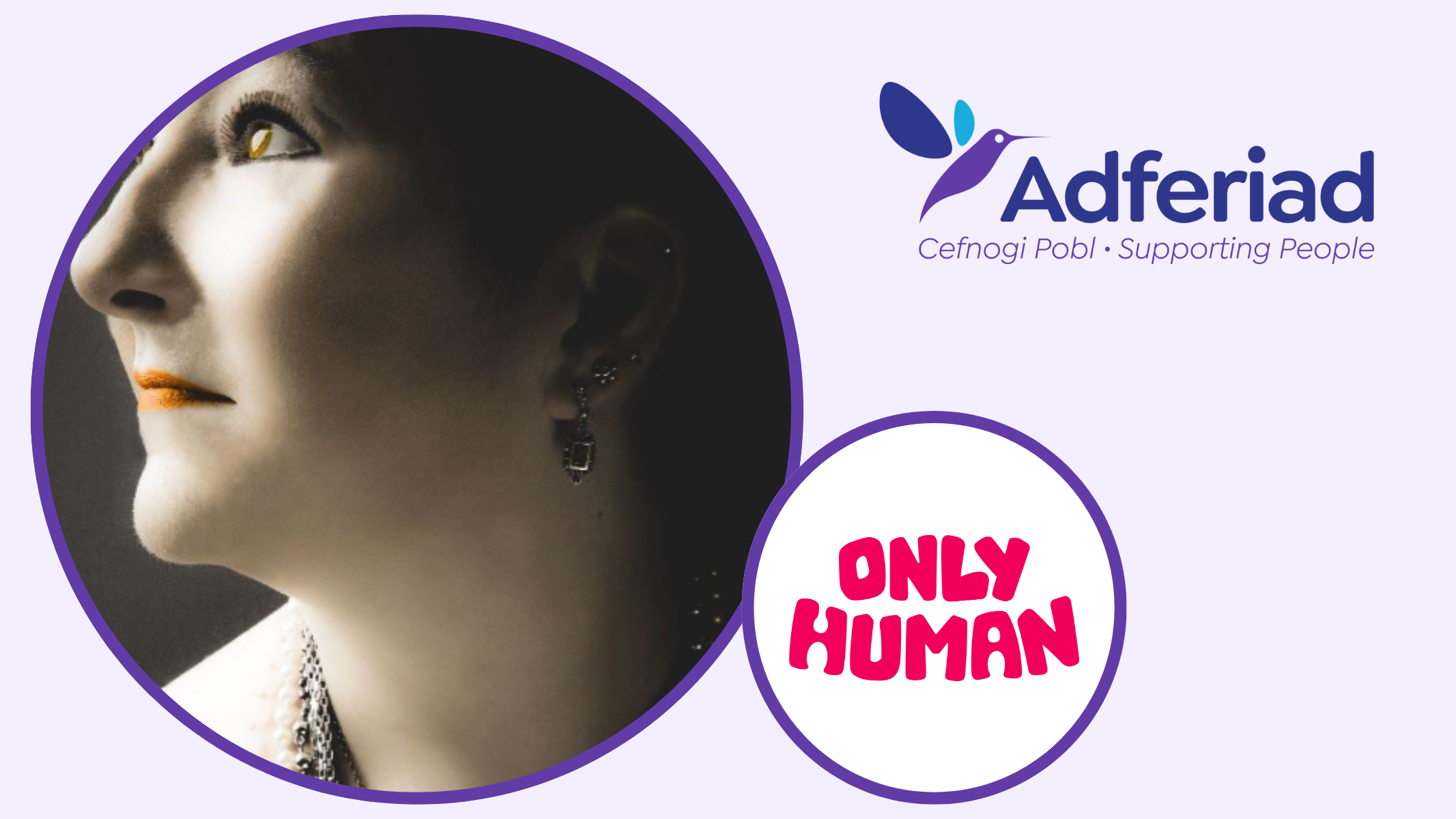
As part of Addiction Awareness Week, Adferiad’s Only Human Campaign is advocating for a kinder and more compassionate Wales, changing the conversation around addiction.
Only Human empowers individuals with lived experience of addictions by giving them a platform to tell their stories, promoting healthy conversations and raising awareness of related stigma.
Melanie Antoinette is a prospective champion for the campaign, sharing her lived experience as part of Addiction Awareness Week, to show that recovery is possible.
The following extract is written in her words.
“When I first reached out for help with my addiction to alcohol and recreational drugs, I encountered a level of stigma that left a lasting imprint. It came from people I trusted—friends, family, colleagues—and it arrived at a time when I was already struggling under the weight of major depressive disorder, diagnosed at just 15. I had spent years carrying an invisible heaviness that I never had the words for. Only later in life did I understand why it had been so hard to express myself or to make sense of my emotions.
At the age of 50, during a routine conversation, my GP gently suggested that I might be autistic. It was something I had never considered, yet within weeks I was fast-tracked for an assessment and received a formal diagnosis of High-Functioning Autism. I was
surprised at first, but as I began learning about Autism, so many long-standing questions were finally answered.
The day-dreaming in school, the struggle to connect socially, the deep exhaustion from masking and trying to fit in, and the preference—even now—for my own company. These were not character flaws; they were traits of a neurodivergent mind navigating a world that often felt confusing and overwhelming. Later, I also received a diagnosis of Dissociative Identity Disorder, Social Anxiety Disorder and Complex-PTSD — responses to early years trauma. My mind protected me when I had no language or support for what I was going through. With understanding came compassion for my younger self, who coped in the only ways I knew.
But before these diagnoses, long before clarity, substances became my way to cope. Alcohol and recreational drugs provided temporary relief from internal chaos I didn’t know how to manage. They helped me function like my peers, helped me fit in socially, and helped me numb the feelings I couldn’t articulate. I didn’t look like someone who was struggling. I went to College and University.
I maintained a long career in IT and Telecom Support. I was the wife, the mother, the homeowner and so on. From the outside, I seemed capable, stable, and quietly successful. But behind the scenes, I was doing everything I could to hold myself together, all the while hiding the addictions that had become my private survival mechanism.
When I finally built up the courage to speak honestly about my struggles, I hoped for understanding from family, friends and colleagues. Instead, I was met with judgement, confusion, and—at times—rejection. Some people viewed my addiction as a personal weakness, a failure of character, or something I should simply “snap out of.” Others assumed that because I had held jobs and responsibilities, I couldn’t possibly have an addiction.
Their reactions were rooted in misunderstanding: misunderstanding of addiction, misunderstanding of mental illness, and misunderstanding of neurodiversity. But by their judgement, I remained in shame. I felt like a failure. I felt “less than.” I compared myself to others who didn’t rely on substances to get through the day, and I concluded—wrongly—that I wasn’t good enough or strong enough. My depression and anxiety see-sawed.
But despite the stigma, despite the shame, I made the decision to change my life. Recovery was not immediate, nor was it easy. It was a gradual, imperfect journey—one day at a time, often one hour at a time. But it was a journey I committed to wholeheartedly.
Today, I have been sober for 25 years from recreational drugs, 15 years from alcohol, and 13 years from nicotine. These milestones represent years of honesty, healing, support, determination and self-discovery. They represent learning to understand my mind instead of escaping it. They represent reclaiming my health, my self-worth and my true identity.
Most importantly, recovery allowed me to finally view myself with compassion instead of criticism. I now understand that addiction is not a moral failing. It is a response to pain, loneliness, trauma, overwhelm and unmet needs. It is a human response. And when we treat addiction with judgement rather than empathy, we push people further into secrecy and suffering.
This is why I speak out. This is why campaigns like Only Human matter. Stigma silences people. Stigma stops people from seeking help. Stigma isolates the very people who need connection the most.
By sharing my story, I hope to challenge these misconceptions and remind others that asking for help is not a sign of weakness—it is an act of courage. Addiction can affect anyone. Mental illness can affect anyone. Neurodivergent people often struggle silently for decades before being understood.
I am sharing my experience to show that healing is possible, that recovery is real, and that every person deserves dignity, support and compassion. Because at the end of the day, we are all only human—doing the best we can with the experiences we’ve lived through and the tools we’ve had. And being human means we all deserve the chance to heal and to be understood. “